ntroduction: The Crisis Point of Homeownership
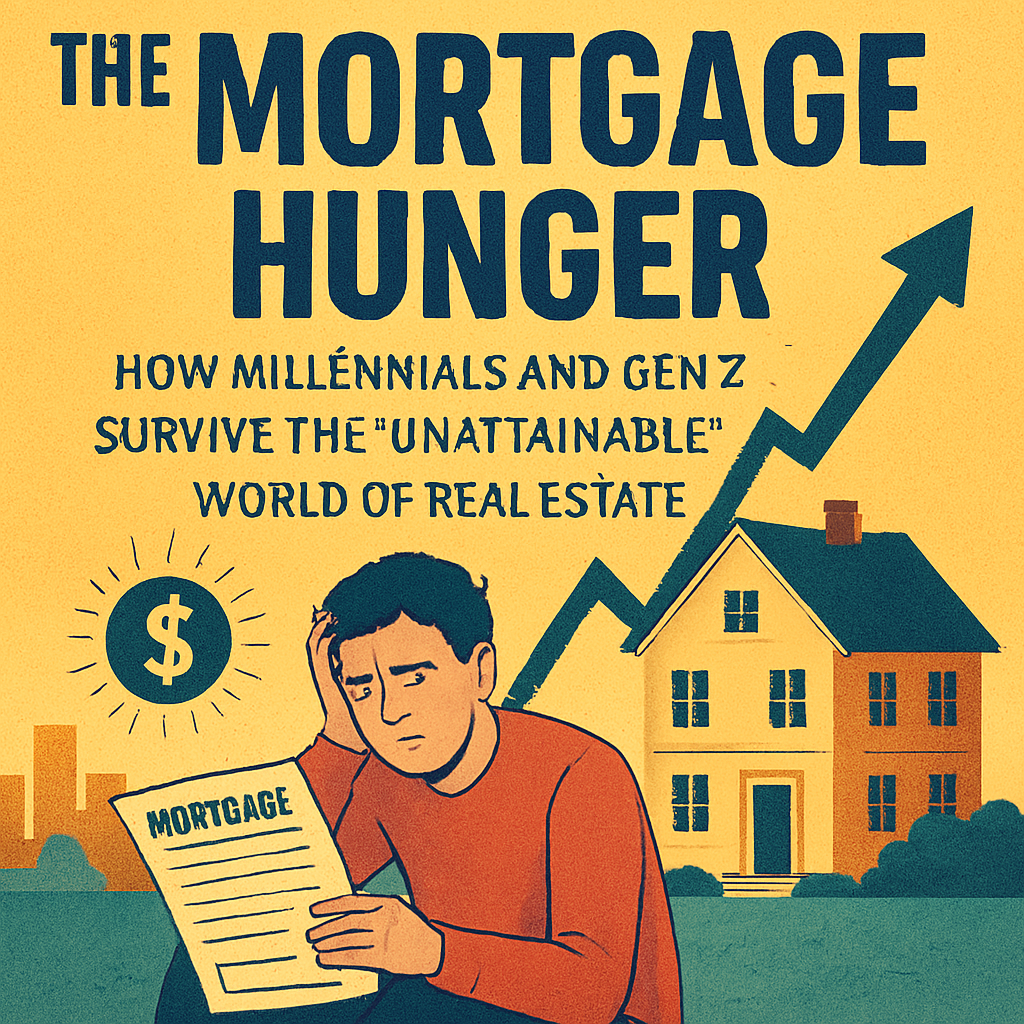
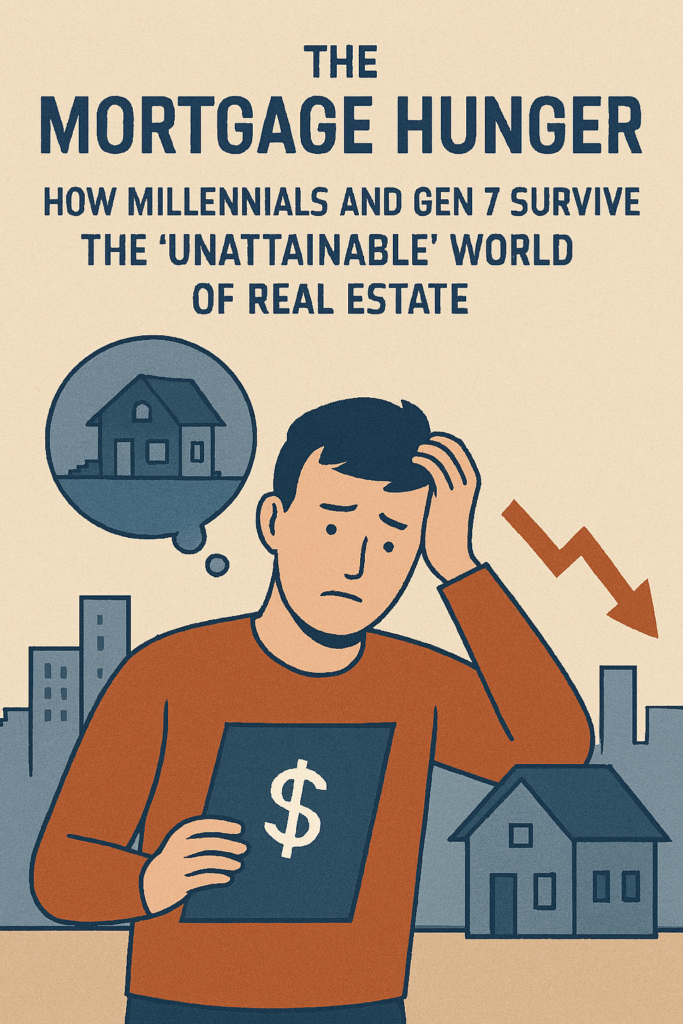
The dream of owning a home—a stable, tangible piece of the future—is rapidly turning into an agonizing mirage for the younger generations. For Millennials and Gen Z, the phrase “starter home” sounds like a historical relic. We are living through the Mortgage Hunger: a collective, gnawing anxiety born from soaring home prices, crushing interest rates, and stagnant wage growth. This isn’t just a financial challenge; it’s an emotional crisis that strikes at the core of what it means to achieve adult stability.
This post isn’t another lament about a broken system. While we acknowledge the pain, our focus is on survival and strategy. We’re turning the conversation from “Why can’t we own a home?” to “How can we still build wealth and security in this market?“
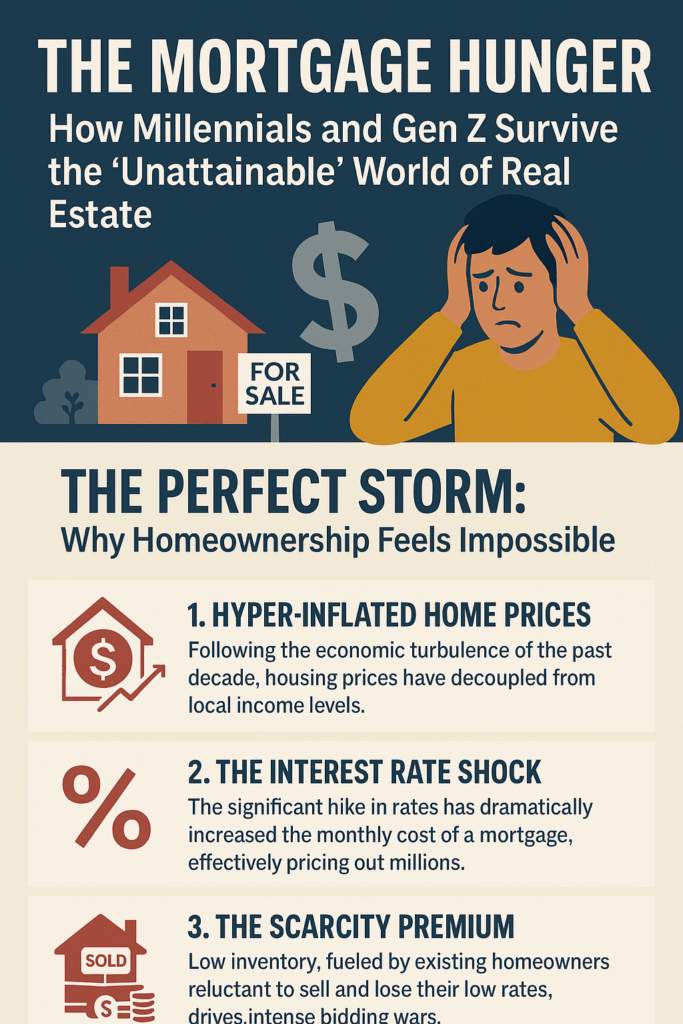
The Perfect Storm: Why Homeownership Feels Impossible
To understand the solution, we must first understand the depth of the problem. The current market dynamics have created a seemingly insurmountable barrier to entry for first-time buyers.
1. Hyper-Inflated Home Prices
Following the economic turbulence of the past decade, housing prices have decoupled from local income levels. The average home price in many Tier 1 and even Tier 2 cities has multiplied, while median salaries have only crept up. This widening gap renders the standard 20% down payment an astronomical sum that often takes decades to save.
2. The Interest Rate Shock
The era of historically low interest rates is over. The significant hike in rates has dramatically increased the monthly cost of a mortgage, effectively pricing out millions. A home that was affordable at a 3% rate becomes financially crippling at 7% or higher. Buyers are now facing a double whammy: higher principal and higher cost of borrowing.
3. The Scarcity Premium
Low inventory, fueled by existing homeowners reluctant to sell and lose their low rates, drives intense bidding wars. Young buyers are forced to compete with cash offers from investors and seasoned buyers, often waiving contingencies and overpaying—a risky proposition for those navigating their first major financial commitment.
Emotional Connection: If you feel like you’re doing everything right—saving, budgeting, working hard—yet the goalpost keeps moving, you are not alone. This shared struggle creates a powerful sense of community and is the fuel for the viral potential of this topic.
Alternative Paths to Ownership & Wealth Building
The key to navigating the Mortgage Hunger is pivoting the strategy. If the traditional 30-year, single-family mortgage is off the table, what innovative and practical alternatives can Millennials and Gen Z leverage?
1. The Power of Co-Ownership (Fractional Ownership)
Buying a property solo might be impossible, but buying with others can be feasible.
Friends/Family Co-Buying: Pooling resources with trusted partners allows for splitting the down payment, closing costs, and monthly mortgage. Legal agreements are crucial here, outlining exit strategies, maintenance responsibilities, and equity division.
Tenant-in-Common (TIC) Structures: These legal frameworks allow multiple unrelated parties to own distinct, undivided interests in a single property, providing a pathway to homeownership with a lower individual financial burden.
2. Investment in Real Estate Without Direct Ownership (REITs)
For those priced out of physical property, investing in Real Estate Investment Trusts (REITs) is a powerful tool to generate wealth tied to the housing market.
What is a REIT? Think of it as a mutual fund for real estate. REITs own, and often operate, income-producing real estate (like apartment complexes, data centers, or shopping malls).
The Benefit: You can invest small amounts and earn dividends from rent and property value appreciation without the debt, maintenance, or high barrier to entry of a physical purchase. This allows you to build a “virtual down payment” while waiting for a better buying environment.
3. The “Second-Tier City” Migration
Remote work has unlocked the ability to “geo-arbitrage”—earning a Tier 1 salary while living in a more affordable Tier 2 or Tier 3 city.
Strategy: Explore growing metropolitan areas with strong job prospects and a significantly lower cost of living index (COLI). This move can turn an “unattainable” $700,000 house into a “manageable” $350,000 house, instantly cutting the required down payment in half and making monthly payments significantly lighter.
The Sacrifice: This requires a willingness to leave familiar social circles, but the financial stability gained can outweigh the cost.
4. House Hacking and Multi-Unit Investing
This strategy involves buying a multi-unit property (duplex, triplex) and living in one unit while renting out the others.
The Goal: The rental income covers or significantly offsets the entire mortgage payment, allowing the owner to live for free or near-free. This accelerates savings and builds equity at an unprecedented rate. This is often the most aggressive and effective strategy for building real estate wealth early.

 Bitcoin
  Ethereum
  Tether
  XRP
XRP  BNB
BNB  USDC
USDC  Solana
  TRON
TRON  Dogecoin
  Bitcoin Cash
  USDS
USDS  Litecoin
  PayPal USD
  Sui
Sui  USDT0
USDT0  Ethereum Classic